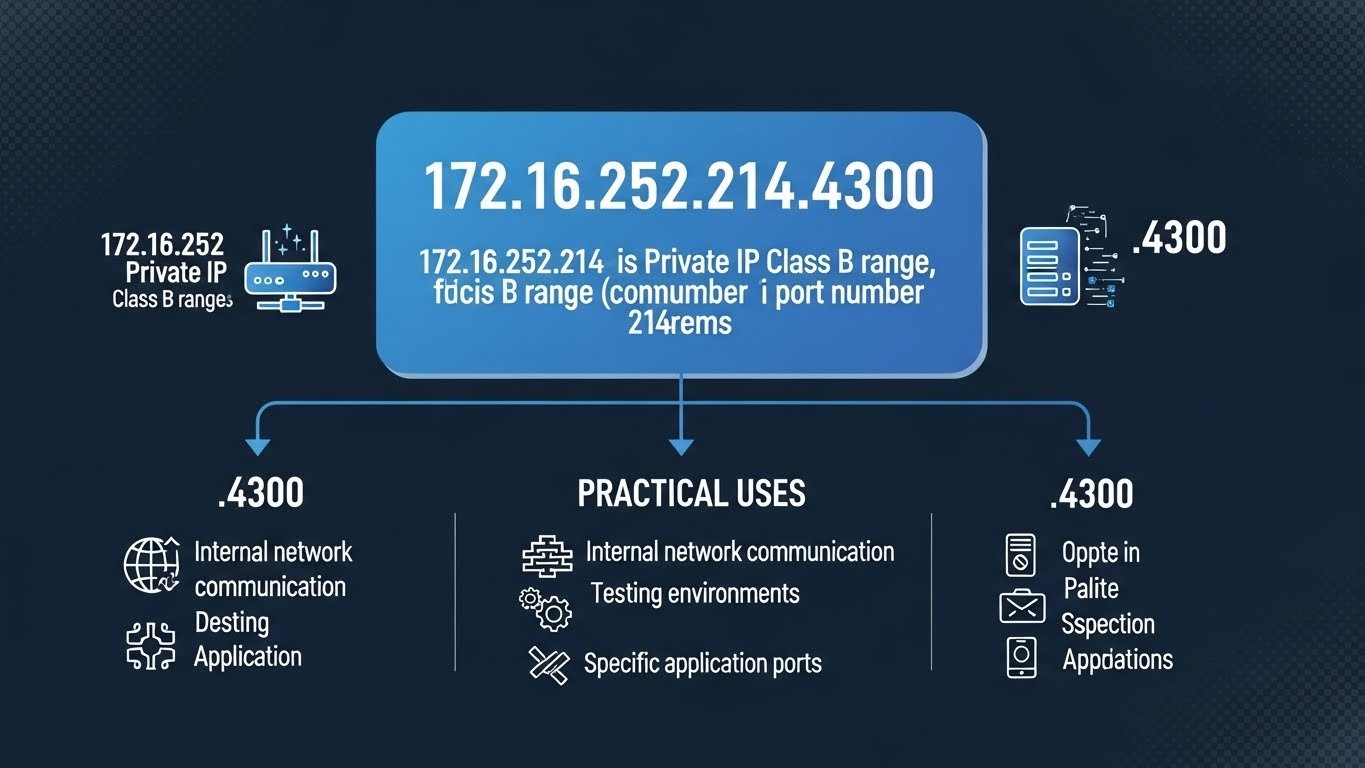
In many technical environments, an identifier like 172.16.252.214.4300 is used to represent specific internal routing paths or system access points. Understanding how 172.16.252.214.4300 works can help teams create more organized, secure, and efficient internal networks.
Why 172.16.252.214.4300 Matters in Closed Network Structures
Internal networks rely on predictable structures, and identifiers such as 172.16.252.214.4300 help maintain order. When systems communicate behind firewalls or inside private infrastructures, it’s crucial to use values that avoid conflict. Using 172.16.252.214.4300 ensures a clear separation between internal services and public-facing layers. This improves workflow, prevents accidental exposure, and strengthens internal organization. Administrators value consistency, and identifiers like 172.16.252.214.4300 provide the stable foundation they need.
How 172.16.252.214.4300 Supports System Mapping
Every internal system relies on accurate mapping. A reference such as 172.16.252.214.4300 can be assigned to a device, a service, or a communication endpoint. When mapping is consistent, teams can track how information flows across the infrastructure. Developers may rely on 172.16.252.214.4300 to test functions or route internal requests. This helps avoid misunderstandings and ensures that each part of the system communicates with the correct destination. The clarity provided by 172.16.252.214.4300 improves efficiency and decreases errors.
Technical Scenarios Involving 172.16.252.214.4300
Many real-world technical scenarios involve identifiers like 172.16.252.214.4300. It may appear in load balancer configurations, service clusters, or private testing environments. When operating containerized applications, developers often assign structured references such as 172.16.252.214.4300 to ensure seamless interaction between microservices. These values also support internal dashboards, administrative panels, and monitoring tools. The predictability of 172.16.252.214.4300 allows teams to build stable and scalable systems.
Security Benefits of Using 172.16.252.214.4300
Security teams often depend on private identifiers to reduce risk. A structured value like 172.16.252.214.4300 restricts access to internal operations, making unauthorized entry more difficult. Sensitive applications—such as reporting systems, development interfaces, or private APIs—benefit from using 172.16.252.214.4300 within closed networks. This reduces visibility on the public web and protects sensitive components. Internal-only identifiers also reduce attack surfaces, helping organizations maintain strong security posture.
Troubleshooting Using 172.16.252.214.4300
When internal processes fail, identifiers like 172.16.252.214.4300 help narrow down the cause. Troubleshooting may include checking routing rules, validating service bindings, or reviewing firewall settings. If a component linked to 172.16.252.214.4300 is not responding, administrators can trace its activity through logs and monitoring systems. The structured pattern of 172.16.252.214.4300 makes it easier to locate issues, compare configurations, and identify misalignment. This keeps downtime to a minimum and simplifies repair procedures.
172.16.252.214.4300 and Team Collaboration
Clear communication is essential for technical teams. When everyone uses a consistent identifier like 172.16.252.214.4300, it minimizes confusion in documentation, diagrams, and system discussions. Multiple departments—development, operations, security, and quality assurance—depend on synchronized terminology. By referencing 172.16.252.214.4300 across internal documentation, teams stay aligned and reduce the risk of misunderstanding system behavior.
Scalability Potential of 172.16.252.214.4300
Scalability requires structured organization. When systems grow, new services must integrate smoothly with existing components. Identifiers like 172.16.252.214.4300 support future expansion by maintaining consistency across the architecture. Whether adding a new virtual machine, deploying a new microservice, or configuring a new internal endpoint, having a predictable identifier pattern ensures stability. The long-term scalability of a system improves when internal identifiers remain structured.
Evolving Importance of 172.16.252.214.4300 in Modern Infrastructure
Modern infrastructures—especially hybrid, virtualized, and container-based systems—depend on clear internal routing. As technology advances, identifiers such as 172.16.252.214.4300 continue to play an important role in workload distribution, service communication, and network segmentation. Their relevance grows stronger as organizations move toward more distributed architectures.
Conclusion
The identifier 172.16.252.214.4300 is more than just a technical string; it is an essential component of internal system organization. By using 172.16.252.214.4300 strategically, teams can maintain clarity, enhance security, simplify troubleshooting, and prepare for scalable growth. Its structured nature supports stable and efficient digital environments.
About the Author